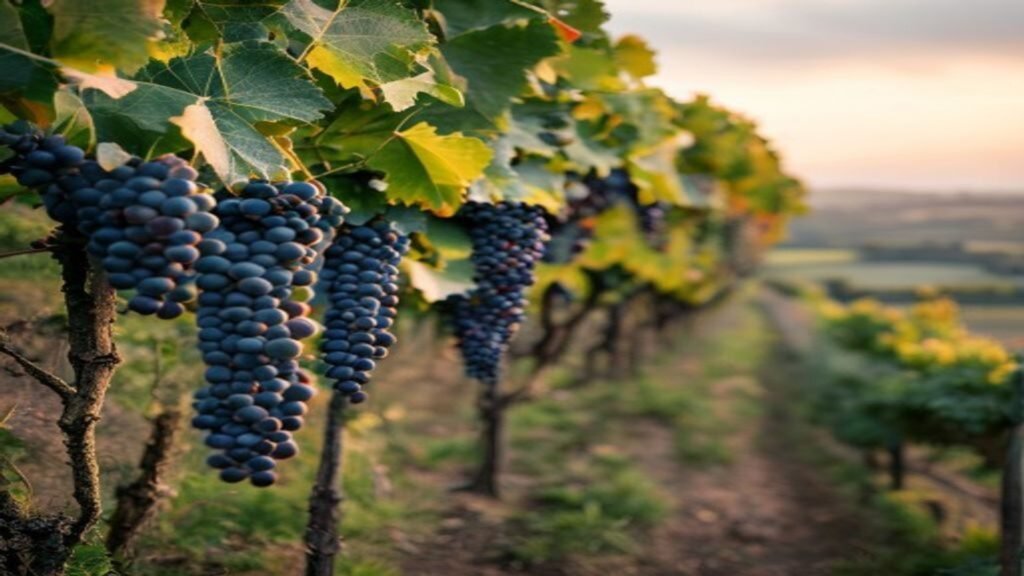
English wine was, within living memory, a joke with a small amount of truth attached to it. Thin, acidic, made by enthusiasts on unsuitable land, it existed as a curiosity rather than a category. Today English sparkling wine wins international blind tastings against Champagne, vineyard plantings cover thousands of hectares, and French houses have bought land in Kent and Hampshire.
The transformation is genuine and its causes are more interesting than the simple climate explanation usually offered.
Geology did more than climate
The most important factor is that southern England sits on the same chalk formation that runs beneath the Champagne region, interrupted by the Channel. Chalk provides drainage and reflects heat while retaining moisture, which suits the grape varieties used in traditional-method sparkling wine.
This was known for decades and was not exploited, partly because growing conditions were marginal and partly because the industry lacked the capital and expertise to attempt serious production. Soil survey information held by the Environment Agency and agricultural bodies mapped the resource long before anyone planted commercially at scale.
Warming shifted the margin
Climate change moved growing season temperatures into a range where Chardonnay, Pinot Noir and Pinot Meunier ripen reliably rather than occasionally. That is the change that turned a marginal proposition into a viable one.
It is worth stating plainly that this is a benefit derived from a process that is broadly harmful, including to English agriculture generally through drought and flood volatility. The same warming that improved viticulture is now pushing Champagne towards heat stress, which is why French producers are buying English land as a hedge. Climate data from the Met Office shows the shift in growing degree days that made the difference.
The sparkling specialisation was strategic
English producers concentrated on traditional-method sparkling wine rather than attempting to compete in still wine, and this was a sound commercial judgement. Sparkling production suits higher-acid grapes harvested at lower sugar levels, which is exactly what a cool climate reliably delivers.
It also commands higher prices, which matters enormously given the cost structure. Analysis from WineGB on the sector shows sparkling accounting for the majority of production by value, and the premium is what makes the economics work at all.
The economics are brutal
Establishing a vineyard requires substantial capital and produces no revenue for several years. Traditional-method sparkling wine then requires extended ageing on the lees, meaning further years before sale. Total time from planting to first significant income can exceed seven years.
Duty adds a large fixed cost per bottle regardless of quality, land prices in the suitable counties are high because of alternative uses, and labour for pruning and harvest is expensive and increasingly hard to source. Duty structures published by HM Revenue and Customs explain why a bottle cannot be produced cheaply, and why English wine competes on quality rather than price.
Tourism became the second business
Many producers now earn a material share of revenue from visitors: tours, tastings, restaurants, weddings and accommodation. This is partly necessity, because selling direct at full margin transforms the economics compared with wholesale, and partly genuine opportunity in a country where domestic tourism has grown.
Vineyard visiting has become an established leisure activity in the South East, supported by rail access and by the same appetite for domestic short breaks that has benefited other rural destinations tracked by VisitBritain.
What the risks are
Frost remains the great danger. A late spring frost after budburst can destroy most of a year’s crop, and the warming that lengthened the season also brought earlier budburst, increasing exposure. Producers invest heavily in frost protection with imperfect results.
Oversupply is the commercial risk. Plantings expanded rapidly on the assumption of continued demand growth, and much of that fruit has yet to reach production. If demand does not keep pace, prices will fall in a sector whose costs make discounting close to impossible.
Whether it lasts
English wine has established something rarer than a good vintage: a credible category with international recognition and genuine terroir argument behind it. The quality is not a fluke and the investment is not speculative froth.
Its vulnerabilities are the ordinary ones of agriculture — weather, capital cycles, demand — rather than doubts about whether good wine can be made here. That question has been settled, which is a remarkable thing to be able to write about a country that spent centuries importing everything it drank.