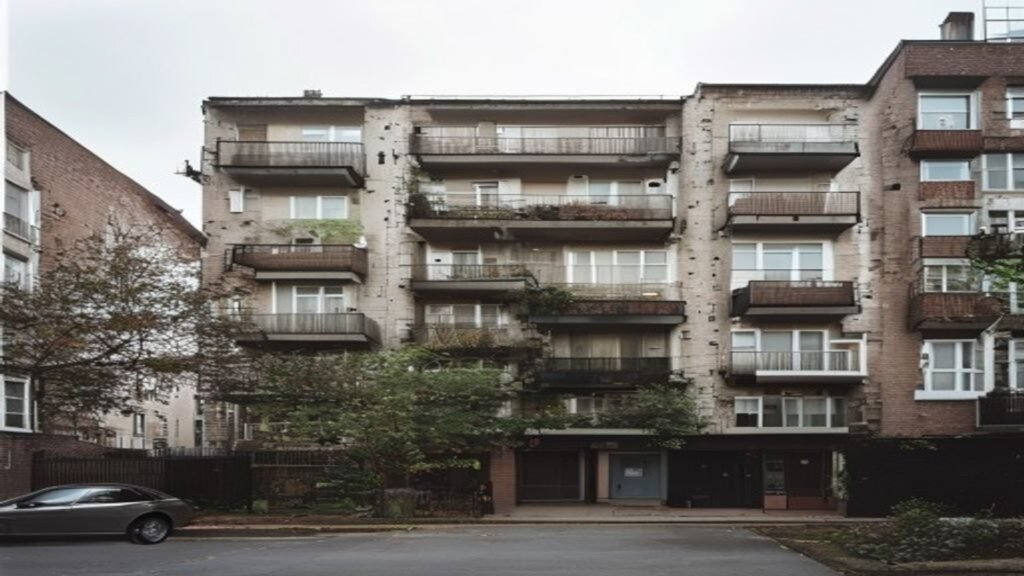
Leasehold is a form of property ownership that almost nobody chooses deliberately and millions of people hold. It exists for historic reasons, persists because it generates income for freeholders, and produces a category of grievance that reform has repeatedly promised to address. The debate is conducted in language — ground rent, marriage value, deed of variation, section 20 — designed to exclude the people most affected.
Stripped of the jargon, the arrangement is straightforward and so are the problems with it.
What leasehold actually is
A leaseholder does not own a property. They own the right to occupy it for a fixed period, typically starting at 99, 125 or 999 years, after which ownership reverts to the freeholder. The freeholder retains ownership of the building and land and has obligations to maintain common parts, funded by charges levied on leaseholders.
The structure made sense for flats before commonhold and similar mechanisms existed, because a building with shared structure and services needs someone responsible for the whole. It makes considerably less sense for houses, where leasehold sale was widespread for years without any shared-structure justification. Guidance published by the Ministry of Housing, Communities and Local Government sets out the basic rights, and the gap between formal rights and practical remedy is where most difficulty arises.
Why lease length matters so much
A lease is a depreciating asset. As the remaining term shortens the property becomes worth less, and below roughly eighty years the cost of extending rises steeply because the freeholder becomes entitled to a share of the value uplift that extension creates.
Lenders become reluctant below a certain remaining term, which can make a flat effectively unsellable. Buyers frequently do not understand this at purchase, and the shortening of the lease is invisible until it becomes urgent and expensive. This is the single most consequential piece of information a leasehold buyer needs and the one least clearly communicated.
Ground rent and the escalation scandal
Ground rent is an annual payment for the land, historically nominal. In a period of aggressive development practice, leases were sold with ground rents that doubled every ten or fifteen years, producing sums that eventually made properties unsaleable.
Investigations by the Competition and Markets Authority into leasehold mis-selling secured undertakings from several developers to remove the worst terms. New leases on houses have largely been prohibited and ground rents on new leases restricted, but existing leases with escalating terms remain in force, and the people holding them are not helped by rules applying prospectively.
Service charges are where the daily friction lives
Leaseholders pay service charges for maintenance, insurance, management and reserves. The charges must be reasonable and leaseholders have rights to information and challenge, but exercising those rights requires time, money and often collective organisation.
Managing agents are appointed by freeholders rather than by the people paying, which creates an obvious misalignment: the agent’s client is not its funder. Where a freeholder profits from insurance commission or from appointing connected contractors, charges can rise without corresponding service. The Property Ombudsman handles complaints, and its remit does not extend to setting charge levels.
Building safety made everything harder
The fire safety crisis exposed leasehold’s deepest flaw: when a building requires remediation, the legal structure determines who pays, and leaseholders discovered they were liable for defects they had no part in creating and no ability to have detected.
Legislation subsequently shifted much of the cost to developers and freeholders for qualifying buildings, but the process has been slow and coverage incomplete. Reporting from the National Audit Office on remediation progress describes buildings still awaiting work years after identification, with residents facing insurance costs and unsellable homes throughout.
Enfranchisement and commonhold
Leaseholders acting collectively can buy the freehold, and individuals can extend leases. Both routes exist in law and both are procedurally demanding, requiring valuation, legal advice and agreement among neighbours who may have different financial capacities and intentions.
Commonhold — where flat owners own their units outright and jointly own the structure — is the model used in most comparable countries. It exists in English law and has been used barely at all, largely because lenders were unfamiliar with it and developers had no incentive to adopt a structure generating no ongoing income.
What reform still owes
The direction of travel is towards cheaper extension, restricted ground rents, greater transparency on charges and a real route to commonhold. What remains unresolved is the position of existing leaseholders, who hold the problematic leases and receive the least benefit from prospective rules.
For anyone buying now, the practical advice is unglamorous: check the remaining term, read the ground rent provisions, ask for three years of service charge accounts, and find out who owns the freehold and who manages the building. Those four questions prevent most of the difficulties this system reliably produces.