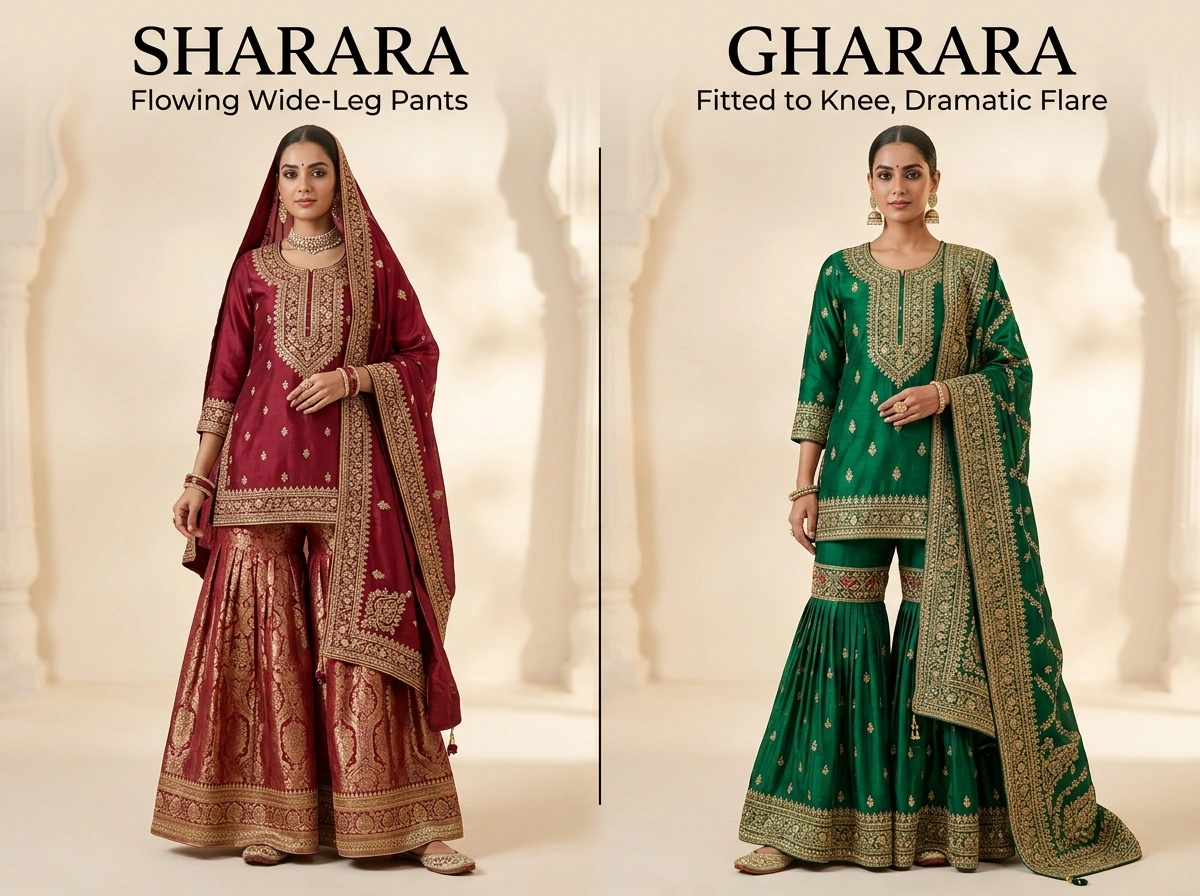
South Asian ethnic fashion has found a devoted following across the United States. From wedding celebrations in New Jersey to festive gatherings in California, women everywhere are embracing these stunning traditional outfits. Two of the most beloved styles are the sharara and the gharara. They look similar at first glance, and many people use the names interchangeably. But these two outfits have distinct histories, structures, and personalities.
If you have ever stood in a boutique wondering which one to pick, this guide will clear things up. Let’s explore what sets these timeless garments apart.
A Shared Royal History
Both the sharara and gharara trace their roots to the Mughal era, a golden age of art, culture, and fashion in South Asia. During this period, royal women favored luxurious, flowing garments that signaled status and elegance. These wide-legged ensembles became staples in the courts of Lucknow and Hyderabad, regions famous for their refined craftsmanship.
The gharara, in particular, gained popularity among the Muslim nobility of Awadh. It became a signature look for weddings and grand celebrations. The sharara evolved as a slightly more relaxed cousin, offering similar drama with a different construction. Over centuries, both styles traveled across borders and generations, eventually reaching fashion-forward communities far beyond their birthplace.
Understanding this shared heritage helps explain why the two outfits feel so closely related. They come from the same cultural family, yet each developed its own unique character.
The Key Structural Differences
The biggest difference between these two outfits lies in their construction. This is where you can truly tell them apart once you know what to look for.
The Gharara: Defined by the Knee Joint
The gharara features a distinctive design at the knee. The fabric is fitted from the waist down to the knee, then dramatically flares out into wide, voluminous legs below that point. This flare is created by joining a separate, often heavily decorated panel at the knee.
That knee joint, called the gota, is usually adorned with intricate embroidery, lace, or zari work. It serves as the visual centerpiece of the outfit. When a woman walks, the lower portion billows out like a flowing skirt, creating a regal, theatrical effect.
The gharara is typically paired with a shorter kurti, or top, which allows the elaborate knee detailing and the flare below it to take center stage.
The Sharara: Flared from the Waist
The sharara takes a different approach. Instead of fitting at the knee, it flares out gradually from the waist all the way down. Think of it as a pair of extremely wide-legged palazzo pants with a smooth, continuous silhouette. There is no knee joint or separate panel.
This creates a clean, sweeping look that feels both graceful and effortless. A sharara dress often pairs with a longer kurti or a flowing top, which balances the wide legs and adds a contemporary touch. The overall effect is fluid and elegant, perfect for the modern woman who wants tradition with a relaxed edge.
In short: the gharara flares at the knee, while the sharara flares from the waist. Once you spot that detail, you’ll never confuse the two again.
Fabric and Embroidery Styles
Both outfits use rich, celebratory fabrics, but their decorative traditions differ slightly.
Gharara designs lean heavily on opulence. Because the knee joint is the star of the show, designers pour their creativity into that area. You’ll often see heavy zari, gota patti, sequins, and detailed thread work concentrated there. Traditional gharara fabrics include silk, jamawar, and brocade, which add weight and structure to the dramatic flare.
Sharara designs tend to spread their embellishment more evenly. Since the silhouette flows continuously, embroidery often runs along the hem, across the kurti, or in scattered motifs throughout. Modern sharara outfits frequently use lighter fabrics like georgette, chiffon, and crepe. These softer materials make the garment easier to wear for long events and travel well, which matters for busy lifestyles.
Color choices for both styles range widely. Deep reds, royal blues, and emerald greens remain popular for formal occasions, while pastels and metallics have surged in recent years among younger wearers.
Occasions for Each Outfit
Knowing when to wear each style can help you make a confident choice.
The gharara carries a more formal, ceremonial reputation. Its elaborate construction and heavy embellishment make it ideal for weddings, religious celebrations, and major family milestones. Brides and close family members often choose ghararas for their dramatic, eye-catching presence. If you want maximum impact at a high-profile event, this is your outfit.
The sharara offers more versatility. While it works beautifully for weddings and festive gatherings, its lighter feel also suits semi-formal parties, religious holidays like Eid, engagement ceremonies, and dinner events. Many women appreciate that a sharara can transition from a daytime celebration to an evening reception with just a change of accessories.
For an American audience juggling diverse social calendars, the sharara’s adaptability makes it a practical favorite, while the gharara remains the go-to for those truly grand moments.
Styling Tips for Both Looks
Getting the styling right elevates either outfit from beautiful to unforgettable.
For the gharara:
- Keep the kurti short to showcase the knee detailing and flare.
- Choose statement jewelry like jhumkas and a maang tikka to match the regal vibe.
- Opt for heels to balance the volume and add height.
- Let the dupatta drape gracefully without covering the decorative knee joint.
For the sharara:
- Pair it with a longer kurti or a fitted top for a modern, balanced silhouette.
- Experiment with belts to define the waist for a contemporary twist.
- Lighter jewelry works well, letting the flowing fabric shine.
- Comfortable wedges or flats keep you moving easily through long events.
For both styles, the dupatta plays a key supporting role. You can drape it over one shoulder, across the front, or over the head depending on the formality of the occasion and your personal comfort.
How Modern Fashion Has Evolved Both Styles
Today’s designers have reimagined these classic outfits for a new generation. The shifts reflect changing lifestyles, especially among the South Asian diaspora in the United States.
Lighter fabrics now dominate the market. Heavy brocades and silks still appear in bridal collections, but everyday and party versions favor breathable georgette and crepe. This makes the outfits far more wearable for long American celebrations that often stretch deep into the night.
Cuts have also become more refined. Designers blend traditional silhouettes with contemporary tailoring, creating pieces that flatter a wide range of body types. Crop-top pairings, fusion jackets, and minimalist embroidery cater to those who want heritage with a modern sensibility.
Sustainability and made-to-order craftsmanship have gained traction too. Many shoppers now seek thoughtfully made garments they can wear for years rather than fast-fashion pieces. This appreciation for quality and longevity reflects a broader cultural shift toward mindful buying.
Color palettes have expanded as well. While classic jewel tones endure, pastels, ombre effects, and unexpected combinations now line the shelves, giving wearers endless room for personal expression.
Making Your Choice
So which one should you choose? It comes down to the occasion and your personal style.
Pick the gharara when you want bold, ceremonial drama, especially for weddings and major celebrations where you want to make a statement. Pick the sharara when you want graceful versatility, comfort, and a look that moves effortlessly from one event to the next.
Both outfits celebrate a rich cultural heritage while offering something for the modern woman. Whether you’re attending your first South Asian wedding or building a wardrobe of festive favorites, understanding these differences helps you shop with confidence.
The beauty of these garments lies in their ability to honor tradition while embracing change. With the right fit, fabric, and styling, both the sharara and gharara can make you feel truly radiant on any special day.
