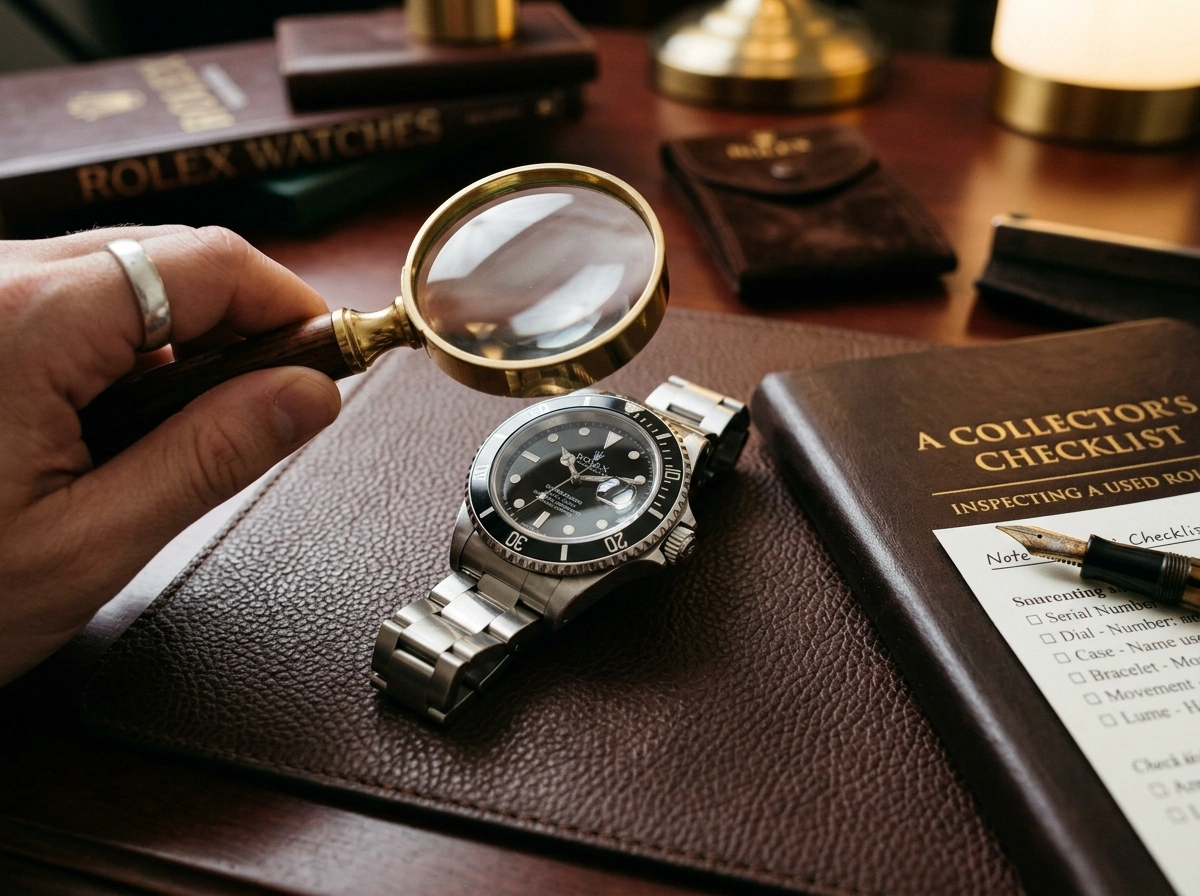
Buying a pre-owned Rolex feels exciting until you realize how much can hide beneath that polished crystal. A swapped dial, a stretched bracelet, or a missing serial number can quietly erase thousands from a watch’s value. The good news? You can spot most problems yourself with a sharp eye and a clear plan.
This collector’s checklist walks you through every inspection point that matters, from the case and movement to provenance and authenticity red flags. By the end, you’ll know exactly what to check before you hand over your money.
Start With the Case Condition
The case tells the story of how a watch was treated over the years. Look at it under good light and turn it at different angles.
- Sharp edges and lugs: Original Rolex cases have crisp lines between the polished and brushed surfaces. Rounded, soft edges often mean heavy polishing.
- Scratches and dings: Light surface wear is normal. Deep gouges may signal a hard life or a recent repair.
- Crown and tube: The winding crown should screw down smoothly. A loose or worn crown can let in moisture and dust.
Takeaway: A case with sharp facets and even wear usually means the watch was cared for and not over-restored.
Check Reference and Serial Numbers
Every genuine Rolex carries a reference number and a serial number, traditionally engraved between the lugs on older models and on the rehaut (inner bezel ring) on newer ones.
Why the numbers matter
- The reference number identifies the exact model and configuration.
- The serial number helps date the watch and confirm it matches the paperwork.
Use the numbers to verify the production year against the model’s known features. If a watch claims to be from 2015 but carries a dial style discontinued years earlier, something is off.
Takeaway: Numbers should be deeply and cleanly engraved. Shallow, uneven, or “acid-etched” numbers are a major warning sign.
Inspect Dial Originality
The dial is the face of the watch and one of the most faked or altered parts. A redial (a refinished or reprinted dial) can slash collector value.
Look closely for these details:
- Font and printing: Rolex text is crisp and perfectly aligned. Blurry, thick, or uneven lettering points to a refinish.
- Lume application: The luminous markers should be neat and consistent. Sloppy edges or mismatched aging across markers suggest replacement.
- Color and patina: Vintage dials may age into warm tones. That patina should look natural and even, not painted on.
- Coronet logo: The crown logo should be sharp and properly proportioned.
Takeaway: When in doubt, compare the dial to verified reference photos of the same reference number from the correct era.
Test the Bracelet for Stretch
Bracelet stretch happens when years of wear loosen the links and pins. It’s common on older watches but affects both comfort and value.
Hold the watch horizontally by the clasp and let it hang. A healthy bracelet stays fairly straight. One that droops and shows wide gaps between links has significant stretch.
- Check that the clasp closes firmly and snaps shut.
- Confirm the bracelet reference matches the watch model.
- Look for mismatched links, which can hint at repairs or replacements.
Takeaway: Some stretch is expected on vintage pieces, but heavy stretch is a bargaining point and a sign of long, hard use.
Verify the Movement
The movement is the heart of the watch, and you want to confirm it’s genuine and running well. If you can open the case back safely (or have a watchmaker do it), check the following:
- Caliber markings: The movement should carry Rolex engravings and a caliber number that matches the model.
- Finishing: Genuine movements show clean, consistent finishing. Rough or mismatched parts raise questions.
- Function: Listen for a smooth, even tick. Set the time and date, and confirm everything advances correctly.
If you can’t open the case, at least observe how the watch keeps time over a day or two and whether the seconds hand sweeps smoothly.
Takeaway: A movement that doesn’t match the reference, or shows non-original parts, can mean a “Frankenwatch” assembled from mixed components.
Review Service History
A documented service history adds confidence and value. Rolex service papers or invoices from reputable watchmakers tell you the watch was maintained.
Ask the seller:
- When was the last service performed?
- Were any parts replaced, and were they genuine Rolex parts?
- Does the watch still hold water resistance if that matters to you?
Takeaway: A recent professional service reduces your near-term repair costs and signals an honest, careful owner.
Examine Paperwork and Provenance
Paperwork can make or break a sale, especially for collectible references.
- Warranty card: A matching warranty or guarantee card with the correct serial number strongly supports authenticity.
- Original box and accessories: A “full set” with box, papers, and tags commands a premium.
- Provenance: Receipts, ownership records, and service history build a clear chain of custody.
Be aware that papers can be faked too. Cross-check the card’s serial number against the watch and confirm the dealer stamp or activation date looks consistent.
Takeaway: Paperwork adds value, but never let documents alone replace a hands-on inspection of the watch itself.
Watch for Signs of Over-Polishing
Over-polishing is one of the most common ways value quietly disappears. Polishing removes metal, softening the case and erasing the original geometry.
Signs to look for:
- Rounded lugs that should be sharp.
- Faded or blurred edges between brushed and polished surfaces.
- Engravings that appear shallow because metal was buffed away.
Takeaway: A watch polished once or twice may be fine. One that’s been buffed repeatedly loses both character and resale value.
Spot Authenticity Red Flags
Counterfeits have become remarkably convincing, and the market for a high-grade rolex superclone shows just how detailed fakes can get. That makes careful inspection more important than ever.
Watch for these warning signs:
- A price that seems too good for the model and condition.
- A magnified date window (Cyclops) that doesn’t enlarge the date by the correct amount.
- Hollow end links or lightweight bracelets on models that should feel solid.
- Sellers who refuse to share clear photos of the movement, serial, and rehaut.
Takeaway: When several small details feel slightly wrong, trust your instincts and walk away or get a professional opinion.
Common Mistakes to Avoid
- Rushing the deal: Pressure tactics often hide flaws. Take your time.
- Ignoring the rehaut and serial: These tiny engravings reveal a lot about authenticity and age.
- Skipping professional verification: For high-value pieces, a qualified watchmaker or authorized service center is worth every penny.
- Buying on photos alone: Always inspect in person or through a trusted, return-friendly dealer.
Final Thoughts
Inspecting a used Rolex comes down to patience and attention to detail. Check the case for sharp edges, confirm the reference and serial numbers, study the dial for originality, and test the bracelet for stretch. Then verify the movement, review service history, and confirm the paperwork lines up.
If you’re ready to buy, start with this checklist in hand and never skip the steps that protect your investment. A careful inspection today saves you from costly regret tomorrow, and it helps ensure the Rolex on your wrist is exactly what it claims to be.
