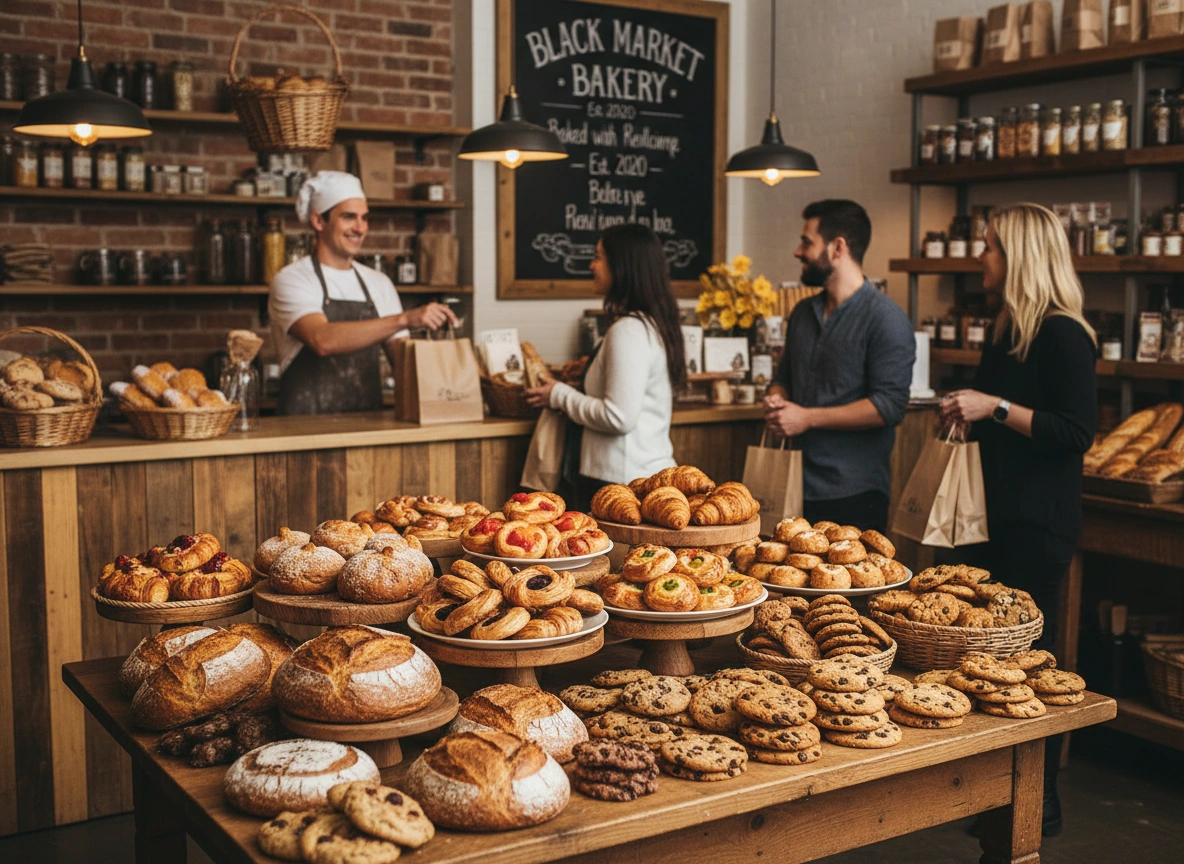
The early months of 2020 sent shockwaves through the culinary world. As lockdowns descended and dining rooms shuttered, thousands of small businesses faced an existential crisis. The bakery sector, reliant on morning foot traffic and casual coffee dates, was hit particularly hard. Yet, amidst the closures and uncertainty, some businesses didn’t just survive—they reinvented themselves.
Black Market Bakery stands as a shining example of resilience in the face of disaster. Led by chef and founder Rachel Klemek, this Southern California staple transformed a moment of peril into a masterclass on adaptability. Their story isn’t just about selling sourdough or cookies; it is a blueprint for how agility, community connection, and a bit of dark humor can pull a small business through the toughest of times.
This article explores the origins of Black Market Bakery, the specific hurdles they faced when the world shut down, and the innovative strategies that turned a potential tragedy into a pandemic success tale.
From Farmers Markets to Brick-and-Mortar
Before understanding their pandemic pivot, we must look at the bakery’s roots. Rachel Klemek, known affectionately as “Chef Rachel,” didn’t start with a storefront empire. Like many great food businesses, Black Market Bakery began with a passion for science and sweets.
Klemek, a graduate of the Culinary Institute of America, initially built her reputation through farmers markets and wholesale accounts in the mid-2000s. The name “Black Market” nodded to her use of basic, honest ingredients—flour, butter, sugar—reclaiming them from the diet-fad era that demonized carbs and fats. She wanted to bring “scratch” baking back to the forefront.
By the time 2020 rolled around, Black Market Bakery had established itself as a beloved fixture in Orange County and San Diego. They were known for their croissant sandwiches, “eggywiches,” and massive cookies. The business model relied heavily on the in-person experience: the smell of brewing coffee, the visual appeal of pastry cases, and the bustling morning rush. It was a model built for social interaction—exactly what the pandemic made illegal overnight.
The COVID-19 Impact: A Sudden Halt
In March 2020, the reality of the pandemic set in. Revenue for restaurants and cafes plummeted instantly. For Black Market Bakery, the threat was immediate. With multiple locations to support and a dedicated staff to pay, the sudden evaporation of foot traffic was catastrophic.
The initial challenges were daunting:
- Safety Concerns: How to keep staff and customers safe while handling food.
- Supply Chain Disruptions: Basic ingredients became scarce as panic buying set in.
- Regulatory Chaos: Rules changed daily regarding capacity, masks, and hours of operation.
Many businesses chose to hibernate, closing their doors hoping to weather the storm. Klemek and her team chose a different path. They recognized that people still needed to eat, and perhaps more importantly, people needed comfort. The challenge wasn’t a lack of demand; it was a lack of access.
Strategy 1: The Essential Goods Pivot
One of the first and most brilliant moves Black Market Bakery made was recognizing the grocery shortage. While supermarkets were stripped bare of flour, yeast, and eggs, the bakery had access to commercial supply chains that were still functioning.
Almost overnight, they pivoted from a cafe to a community pantry. They began selling “provisions” alongside their pastries. Customers could pick up a loaf of sourdough, but they could also buy a pound of butter, a carton of eggs, or a bag of flour.
This strategy accomplished two critical goals:
- Revenue Stream: It replaced lost cafe sales with retail grocery sales.
- Community Service: It positioned the bakery as a vital resource rather than just a luxury treat spot.
By solving a tangible problem for their customers (the inability to find basics), they deepened customer loyalty. People weren’t just coming in for a cookie; they were relying on Black Market for their daily bread—literally and figuratively.
Strategy 2: DIY Kits and At-Home Experiences
As lockdown dragged on, boredom became the new enemy. Families were stuck at home, and the novelty of sourdough starters began to wear off for amateur bakers who realized how difficult it was. Black Market Bakery stepped in to bridge the gap between professional baking and home entertainment.
They launched DIY baking and decorating kits. These weren’t just ingredients; they were experiences. A cookie decorating kit came with pre-baked cookies, piping bags of icing, and sprinkles. A pizza kit included their high-quality dough, sauce, and cheese.
This move capitalized on the “stay-at-home” culture. Parents needed activities for their children, and adults needed a break from the monotony of Zoom calls. By selling an activity, the bakery kept their brand in their customers’ kitchens, even when the customers couldn’t sit in the bakery’s dining room.
Strategy 3: Humor as a Coping Mechanism
Brand voice is often overlooked during crises, with many companies opting for somber, corporate tones. Black Market Bakery leaned into their edgy, slightly rebellious identity.
They didn’t shy away from the grim reality of the pandemic; they poked fun at it. They created “Quarantine Cakes” and cookies decorated with toilet paper rolls or face masks. Their social media presence remained authentic and human.
This tonal choice was risky but effective. It provided comic relief. When a customer bought a cookie iced with the words “Wash Your Hands,” it acknowledged the shared struggle without being depressing. This emotional connection is powerful. It reminded customers that there were real people behind the counter, dealing with the same anxieties, trying to find a laugh in the darkness.
Strategy 4: The Drive-Thru and Curbside Revolution
Operational agility was the final piece of the puzzle. The physical layout of a bakery isn’t usually designed for drive-thru service, but necessity is the mother of invention.
The team rapidly implemented contactless pickup systems. They utilized parking lots for curbside delivery before “curbside” was a standard industry term. They optimized their online ordering interfaces to make them user-friendly for people who had never ordered a croissant online before.
This required a massive shift in workflow for the staff. Front-of-house employees became runners. Kitchen staff had to package items for travel rather than for plate presentation. This flexibility allowed them to capture sales from customers who were too anxious to enter a store, ensuring they captured every possible segment of the market.
Lessons for Small Businesses
The story of Black Market Bakery offers actionable takeaways for entrepreneurs across all industries, not just food service.
1. Don’t Wait for Permission to Pivot
Speed matters. The businesses that waited for government aid or for the “normal” to return often didn’t make it. Black Market Bakery acted immediately, testing new ideas like the grocery pantry within days of the lockdowns. Imperfect action is better than perfect inaction.
2. Solve Current Problems, Not Past Ones
The bakery stopped trying to sell the “cafe experience” because that product was obsolete. Instead, they asked, “What do my customers need right now?” The answer was flour, eggs, and entertainment for their kids. Listen to the market shifts and adjust your offering to match the current reality.
3. Humanize Your Brand
In times of crisis, people support people, not faceless entities. By maintaining a distinct voice and showing the human side of the business, you build a community that wants to see you succeed. Transparency about struggles and finding humor in hardship creates a bond that discounts and sales cannot achieve.
4. Diversify Revenue Streams
Reliance on a single channel (in-store dining) is a vulnerability. The pandemic forced the creation of multiple streams: online ordering, merchandise, DIY kits, and grocery staples. A robust business should have multiple ways to bring cash in the door.
A Sweeter Future
Today, Black Market Bakery continues to thrive. While the panic of 2020 has subsided, the lessons learned remain ingrained in their operations. The online ordering systems are still humming, and the loyal customer base they nurtured through the crisis has remained.
Their story proves that while you cannot control external events—be it a recession, a natural disaster, or a global pandemic—you can control your reaction. By combining operational agility with deep community empathy, Black Market Bakery didn’t just survive the heat; they stayed in the kitchen and kept baking.
For other small business owners, the takeaway is clear: adaptability is the ultimate competitive advantage. When the world changes, you must change with it. And sometimes, a well-timed cookie can make all the difference.
Please visit website for more info.
